


Vita Spider Solitaire
4.72.78K Reviews
App Specs
- Version
- 1.30.0
- Updated On
- License
- Free
- Downloads
- 1,000,000+
- Developer
- Vita Studio.
- Categories
- Card
- Platform
- Android, iOS
Screenshots
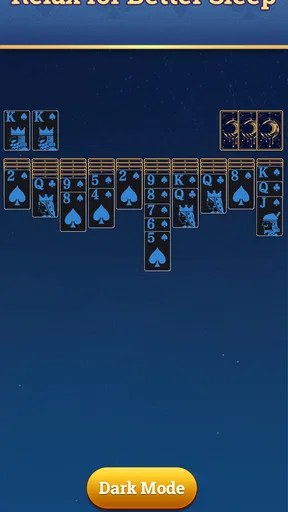
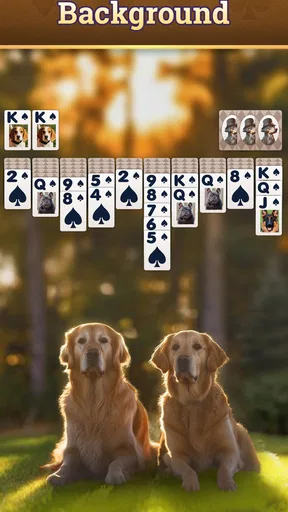
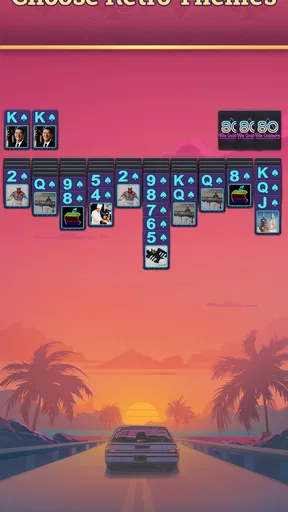

 Analysis by AppCompare
I usually turn to a solitaire game when I want something quiet between tasks rather than another app demanding my attention. Vita Spider Solitaire takes that familiar idea and presents it as a card game built around comfortable, relaxed play. It comes from Vita Studio, is free to download, and is aimed at Everyone, so it is easy to understand why it appeals to casual players, older users, and anyone who wants a simple way to pass a few minutes.
My main question with a game like this is not whether Spider Solitaire is enjoyable; the rules have already proved that. The real question is whether this particular version makes the classic format pleasant enough to keep installed. After spending time with it, I see it as a focused choice for players who value readable cards, uncomplicated sessions, and a calm pace over a large collection of modes or competitive features.
The game has reached over a million installs and holds a 4.6 average from roughly 142 thousand ratings. Those figures suggest that it has found a sizeable audience, but they do not decide whether it suits you. The better test is how you like to play card games: do you want a familiar puzzle that can fill a short break, or are you looking for a deeper strategy game with progression, variety, and more pressure?
What matters before choosing this Spider Solitaire game
I’d use this section to weigh the practical fit before installing: Spider Solitaire rewards patient sequencing, while the large-card presentation is especially relevant if you find compact mobile boards tiring to scan. I’d also keep the free-to-start model in perspective and decide whether a focused card puzzle suits the way I actually spend short breaks. The next section looks at how that fit compares with other solitaire choices.
Start with the kind of card experience you actually want
Spider Solitaire is more involved than the simplest one-deck solitaire variants because you are arranging cards into descending sequences and trying to clear complete runs. That gives each deal a little more planning than a purely automatic-feeling patience game. I need to think about which cards to expose, which empty spaces to preserve, and when moving a sequence will help or block the next decision.
That balance makes this game suitable for players who want light mental exercise without learning a new ruleset. It is not a role-playing game disguised as cards, and it does not require a long tutorial before you can begin. If you already know Spider Solitaire, you can settle in quickly. If you do not, the basic structure is approachable enough to learn through play.
I would choose it for a waiting room, a quiet evening, or a short break when I want an activity that can be paused mentally at any time. I would not choose it as my main game if I need a strong sense of discovery, a story, multiplayer interaction, or a constantly changing challenge. Its appeal depends on whether repetition feels soothing to you rather than boring.
Worth Reading Before You Choose

EA SPORTS FC Mobile 26 Is a Bigger Football Game, but It Takes Time

Flipboard Shows What News Apps Must Do Beyond the Feed

Switching to Android Auto Means Rethinking Your Driving Routine

Google Calendar Makes a Crowded Week Easier to Manage

Ludo King Makes the Most of the Minutes Between Plans

Baby Panda World Brings Quick Play to Modern Phones, but Its Game Library Feels Busy
Readability is more important than it sounds
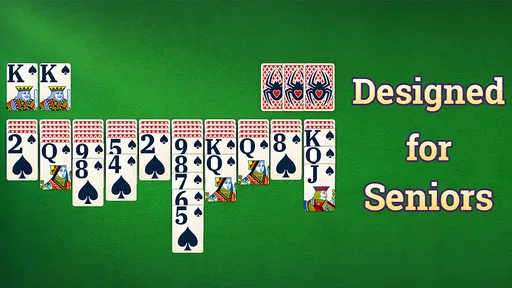
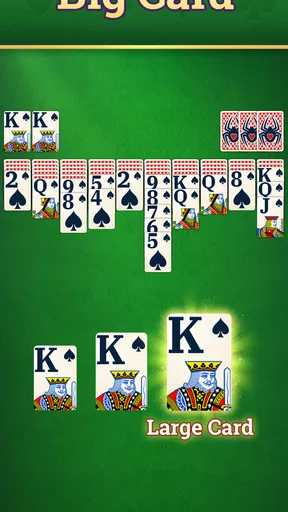
For a card game intended to be comfortable for seniors and relaxed players, the way information is presented matters as much as the rules. A cramped layout or tiny card markings can turn a peaceful puzzle into an exercise in squinting. The large-card focus is therefore central to the experience, not a decorative detail. I can judge moves more easily when suits, ranks, and stacks remain visually clear.
This also changes who may enjoy it. Someone with limited patience for fiddly interfaces may prefer this style to a busier solitaire app filled with animated menus and unrelated distractions. On a larger phone, the cards are especially easy to follow. On a smaller screen, the same board can feel more crowded, so I would recommend checking whether you are comfortable reading card details before committing to long sessions.
There is a useful distinction here between visual comfort and strategic depth. Larger cards make the board easier to read, but they do not make the underlying puzzle easier. You still need to plan several moves ahead. That combination is one of the strongest reasons to try this particular presentation: it lowers interface friction without removing the decisions that make Spider Solitaire worthwhile.
Think about your tolerance for repetition
The usual attraction of a solitaire game is that it can become a small personal ritual. I can play one deal while drinking coffee, stop after a successful sequence, and return later without remembering a complicated plot or inventory. Vita Studio’s game fits that ritual well because its central activity is immediately recognizable.
However, the same simplicity can become a limitation. Players who need frequent novelty may find repeated card layouts and familiar objectives too narrow. A broader card collection might offer several solitaire variants, daily challenges, themed decks, or additional goals. Those alternatives can be better for someone who wants a reason to return beyond the pleasure of solving another deal.
My advice is to decide whether you want a dependable routine or a content-heavy package. This game makes more sense as the former. It is a focused tool for relaxing with cards, not an attempt to turn solitaire into a broad entertainment platform.
How the game fits into an ordinary day
Imagine finishing lunch with ten minutes before a meeting. I would open the game, start a deal, and use the first few moves to shift my attention away from work. If the meeting arrived before I finished, the value would not disappear; the session is easy to treat as a small standalone activity rather than a commitment. That is where a compact solitaire game earns its place on my phone.
Another realistic use is winding down before sleep. The familiar rules can be less stimulating than a fast action game or an endless social feed. Still, I would avoid treating any game as a guarantee of better sleep. The screen itself may not suit everyone at night, and the satisfaction of being close to completing a difficult deal can tempt me to play longer than planned.
For an older family member, the large-card approach may also make the game more inviting than a visually dense alternative. I would first show how to move cards and explain the goal, then let the player establish their own pace. The game works best when nobody feels rushed to optimize every move.
Where Vita Spider Solitaire wins, and where another choice may fit better
For me, the deciding trade-off is focus versus variety: this game is a better match when I want a relaxed Spider puzzle, while a multi-game collection or a more competitive card title may offer stronger reasons to return. I’d judge its lasting value by whether planning each deal stays enjoyable, not by how many sessions I can fit into a routine. The next section considers those strengths alongside the situations where another choice makes more sense.
A calm presentation helps it stand apart
The clearest strength is focus. Instead of asking me to manage a large system, the game keeps attention on the tableau and the next useful move. That makes it easier to recommend to someone who finds modern mobile games noisy or overcomplicated. The large-card design supports the same goal by making the board feel less demanding at a glance.
I also appreciate that the game is free to start. There is no purchase barrier between deciding to try Spider Solitaire and actually playing it. The title is listed as free, with optional in-app purchases ranging from $1.99 to $9.99 per item. That means I can test the core experience before deciding whether any paid extras are worthwhile, while budget-conscious users should still remember that optional purchases exist.
The current version is 1.29.0, and the game runs on Android 7.1 or later. That relatively broad system requirement makes it a practical candidate for an older compatible phone that is not running the newest software. I would still consider the device’s screen size and responsiveness, because comfortable card reading matters more here than having the latest hardware.
Small planning habits make the puzzle more satisfying
One useful habit is to avoid filling an empty column immediately just because the space is available. An empty column is valuable because it gives me room to move a sequence and reveal hidden cards. Using it too early can leave the board more restricted than before. I try to ask whether a move creates access to a face-down card or merely rearranges cards I could already see.
A second habit is to prioritize uncovering hidden cards over building a neat-looking sequence. It is tempting to arrange visible cards in the most orderly way, but that does not always improve the position. I get better results when I look for moves that increase future choices, even if the tableau looks temporarily untidy.
A third trade-off involves building complete runs too quickly. Clearing a sequence feels like obvious progress, but sometimes keeping cards in play gives me more flexibility. I try to consider whether removing the run will open a useful space or reduce the number of cards I can move together. This is the kind of small decision that separates a relaxing puzzle from completely automatic card tapping.
These habits are not special modes or hidden rewards; they are ways to get more enjoyment from the game’s basic structure. They also show why the app can remain interesting after the novelty of the first few deals has faded. The challenge comes from improving my choices, not from collecting unrelated content.
What competing solitaire categories offer
The closest alternative is a traditional Klondike solitaire app. Klondike usually feels more immediately familiar to a broad audience, and its lighter decision-making can be preferable when I want almost effortless relaxation. If Spider’s multi-column planning feels too demanding, Klondike may be the better fit.
FreeCell is another different option. It tends to reward careful planning and can feel more deterministic, which suits players who enjoy analyzing a position rather than accepting the uncertainty of a deal. I would choose FreeCell when I want to think through a puzzle methodically. I would choose this Spider game when I prefer the visual rhythm of building sequences across several columns.
Some solitaire apps are designed as large collections. They may be more attractive to someone who wants to switch between variants in one sitting. The trade-off is that a collection can feel busier and less focused. Vita Spider Solitaire is easier to understand as a dedicated Spider experience, but that specialization means it is not the obvious choice for a player who wants every familiar card format in one place.
There are also competitive and reward-driven card games that use leaderboards, timed rounds, streaks, or elaborate progression. Those can provide stronger motivation for daily play, but they may also add pressure. If I want to relax without comparing my performance with anyone else, the quieter approach here is more appealing. If I need external goals to stay interested, one of those alternatives may hold my attention longer.
The friction of switching from another solitaire app
Moving from a different solitaire game is easy at the rules level if you already know Spider Solitaire. The larger adjustment is expectation. A player coming from a feature-rich collection should not assume that a focused Spider title will replace every other card game. It is better viewed as a second installation for a specific mood: readable, familiar, and low-pressure.
There is also a practical cost to switching habits. You may already know the controls, visual style, and deal behavior of your current app. Even a small interface change can make the first few sessions feel slower, especially if you have developed a preferred way to scan the tableau. I would give this game several short sessions rather than judging it after one awkward deal.
The free entry reduces the financial risk of trying it, but optional purchases still deserve attention. I would avoid buying anything until I know whether the base experience meets my needs. For a player who only wants occasional solitaire, paying for extras may add little value. For someone who plays daily and finds a particular optional item useful, the decision can be more reasonable, but it should remain a personal convenience rather than a requirement to enjoy the core game.
Who should install it, and who should skip it
I would recommend it to older players who want clearly presented Spider Solitaire, beginners who prefer a gentle introduction to the format, and experienced players seeking a straightforward version for short sessions. It also suits anyone who likes games that can be played without sound, a social network, or a long uninterrupted block of time.
I would be more cautious about recommending it to players who want multiplayer competition, a story campaign, extensive customization, or a wide selection of card variants. It may also disappoint people who expect every deal to be easily solvable or who dislike repeating a familiar structure. Spider Solitaire rewards patience, and not every position will feel equally friendly.
Players with older phones should pay attention to the Android requirement of 7.1 or later. For compatible devices, the larger-card concept is a meaningful advantage, but screen comfort remains personal. If you regularly struggle to read card ranks on your current phone, I would test the layout briefly before settling in for longer play.
My recommendation after weighing the trade-offs
Vita Spider Solitaire is a good decision when the priority is a calm, readable Spider Solitaire board rather than a large mobile gaming ecosystem. I like its narrow purpose because it makes the app easy to open and understand. The game does not need a complicated explanation to deliver value: I can begin with familiar cards, make a few planning decisions, and stop whenever I am ready.
Its limitations are the natural cost of that focus. Players seeking variety, competition, or a stronger progression system may feel that the experience is too contained. Even within solitaire, a broader app can be a better single download if you regularly switch between Klondike, FreeCell, and other formats.
For me, the deciding factor is the large-card, low-pressure presentation. It makes this a particularly sensible choice for relaxed sessions and for people who find many mobile interfaces visually cluttered. The Everyone rating also makes it broadly approachable, though the best audience is still anyone who genuinely enjoys patient card planning.
My final recommendation is to try it if you want one dependable Spider game and prefer comfort over spectacle. Start without making an in-app purchase, play several short deals, and notice whether the board feels easy to read and the planning feels satisfying. If those two things work for you, this free card game from Vita Studio is likely to become a useful little break-time companion. If you need variety or competition to stay engaged, choose a broader solitaire collection instead.
Pros
- Simple controls make card movements easy on phones and tablets.
- Multiple difficulty levels suit both casual and experienced solitaire players.
- Quick games work well for short breaks or daily play sessions.
- Clear card layouts help you follow the tableau without confusion.
- Offline play lets you enjoy games without a constant internet connection.
Cons
- Ads may interrupt play or become distracting between rounds.
- Limited variety can make the experience feel repetitive over time.
- Small cards may be difficult to read on compact phone screens.
- Some features may require in-app purchases or premium access.
- Battery use can increase during longer gaming sessions.
FAQs for Vita Spider Solitaire
What is Vita Spider Solitaire, and how is it played?
Vita Spider Solitaire is a digital version of the classic Spider Solitaire card game, designed for phones and tablets. The main objective is to arrange cards in descending order within the tableau and build complete sequences from King to Ace in the same suit. Depending on the selected difficulty, you may play with one, two, or four suits, making the game suitable for both beginners and experienced players.
Can I play Vita Spider Solitaire without an internet connection?
Vita Spider Solitaire is generally designed as a casual game that can be enjoyed without a constant internet connection, which makes it convenient for travel, commuting, or relaxing away from Wi-Fi. However, certain features may require access to the internet, including advertisements, cloud synchronization, updates, leaderboards, or other online services. It is best to launch the game once online before playing offline.
Is Vita Spider Solitaire free to download and play?
Vita Spider Solitaire can typically be downloaded and played for free, allowing users to access the core solitaire experience without an upfront purchase. Like many free mobile games, it may include advertising, optional purchases, or premium features. Before downloading, check the store listing for the current pricing model, available in-app purchases, and whether an ad-free option is offered in your region.
Does Vita Spider Solitaire offer hints, undo options, or beginner-friendly features?
The game is intended to be accessible to a wide range of players and commonly includes helpful features such as undo controls, hints, automatic card movement, and clear visual feedback. These tools can make difficult layouts less frustrating, especially when learning the rules or playing with multiple suits. Availability and limits may vary by version, difficulty level, or account settings.
Is Vita Spider Solitaire suitable for children and older players?
Vita Spider Solitaire is a straightforward card game with simple rules, readable layouts, and a relaxed pace, so it can be suitable for both children and older players. Nevertheless, parents should review the app’s age rating, advertising, privacy information, and any in-app purchase options before installation. Players who prefer larger cards or reduced visual clutter should also check the accessibility settings.


